
For Recreational Runners
Desk posture and running mechanics aren't separate problems. Tightness built up during an eight-hour workday shows up again a few miles into a run.
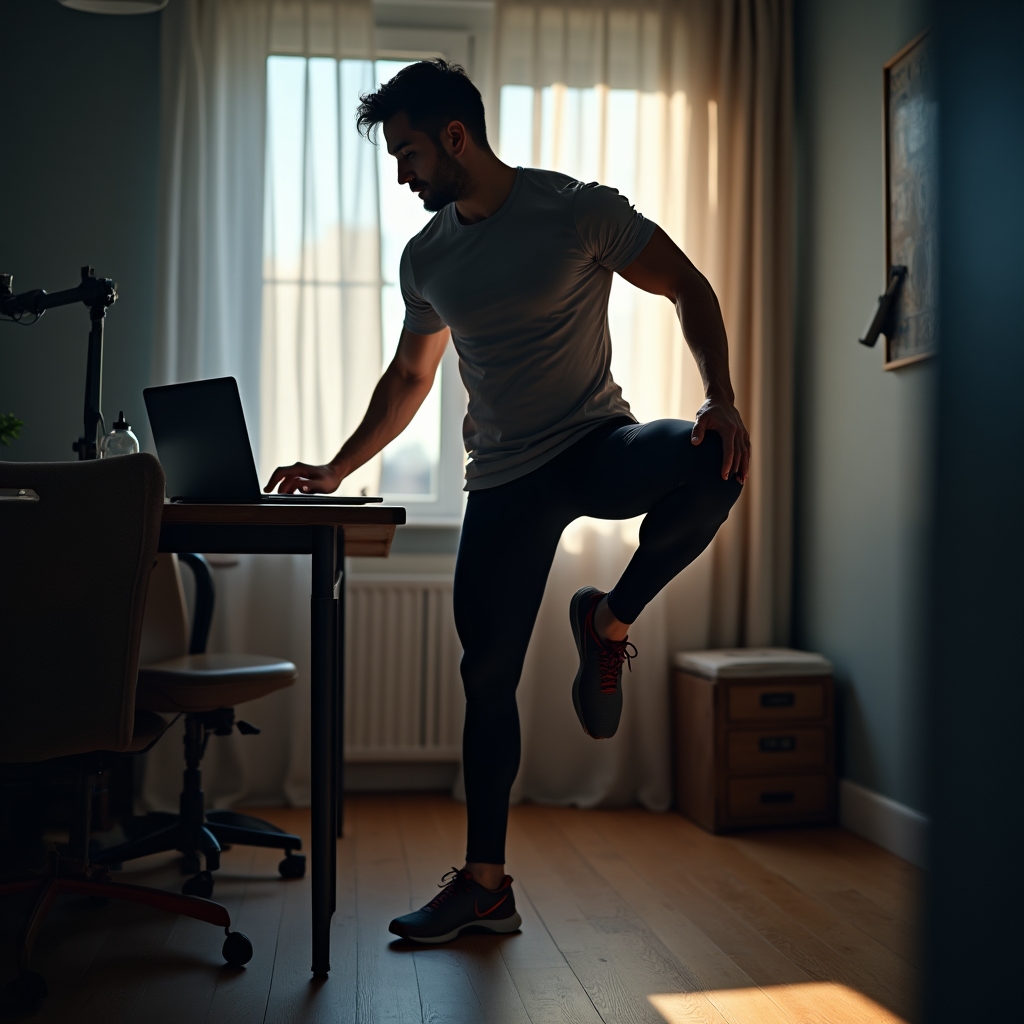
The Overlap
Hip flexors don't know the difference between a desk and a treadmill
Recreational runners who also work remote hours often assume their running form is the issue when lower back or hip discomfort shows up. Sometimes it is. But hours of seated hip flexion at a kitchen table can shorten the hip flexors and alter pelvic positioning well before a shoe ever touches pavement.
This course doesn't cover running technique. What it does cover, directly relevant here, is how prolonged sitting affects hip and lumbar mechanics, which is exactly the same anatomy involved in stride length and pelvic stability while running.
Where the Modules Apply
Relevant sections for a runner's routine
Module 1 and pelvic tilt
Chair seat depth and backrest angle affect anterior pelvic tilt, which carries over into hip position during a stride.
Module 2 and thoracic mobility
A collapsed neck and upper back posture from a low monitor can limit thoracic rotation, which many runners rely on for arm swing efficiency.
Module 3 and standing recovery
Alternating between sitting and standing during the workday can reduce the total time hip flexors spend in a shortened position before a run.
Module 4 and pre-run mobility
The hourly micro-movements double as a light mobility routine that some runners fold into their pre-run warm-up.
Two Weeks of Small Shifts
What often gets reported after consistent practice
Runners who work through Module Four and keep up the hourly movements for a couple of weeks often describe an easier first mile, less stiffness getting out of a chair, and a bit more comfort in a deep hip stretch. These are general, commonly reported patterns rather than a guaranteed outcome, and individual results vary depending on running volume, chair setup, and overall activity level.
If hip or lower back pain during running is sharp, persistent, or worsening, that's outside the scope of this course, and a physical therapist or sports medicine physician is the appropriate next step.
A workday habit, not a training plan
This course addresses desk posture. It does not replace a running-specific training or injury-prevention program.
Complementary, not clinical
Think of it as reducing one contributing factor to hip and back tightness, alongside whatever routine you already follow.
See how the full course fits into your week
The four modules take a few short sessions to work through, and each one can be revisited before or after a run.